SmoothScar Inc. / Evidence & Education / How to Remove a Scar
How to remove a scar
By Smooth Scar · Published November 20, 2026
No treatment removes a scar completely. A scar is new tissue that replaces normal skin. But scars can be made flatter, softer, lighter and much less noticeable — most with simple at-home care, some with a dermatologist’s help. What works depends on the scar’s type, age and cause. Start only once the wound is fully closed.
BioRNA Daily (Antiscar): $300/box — 2 boxes $515, 3 boxes $710, 4 boxes $880. BioRNA-C: $375/box — 2 boxes $600, 3 boxes $825, 4 boxes $1,000.
This guide is general information, not medical advice. If a scar is painful, growing, infected or limits movement, see a doctor.
What kind of scar do you have?
The right care starts with knowing what you are looking at. Most scars fall into four groups:
- Flat scars. The most common kind — they fade and soften over the first year, often with simple at-home care.
- Raised scars (hypertrophic). Thick, raised scars that stay inside the original wound. They can soften and flatten over time, and they respond to patches and steroid injections.
- Keloids. Raised scars that grow beyond the original wound. They are the hardest to treat and often need a dermatologist.
- Indented scars. Dents left by acne, chickenpox or deep wounds. Creams and patches help less here; fillers, laser or microneedling are the usual in-office options.
If you are not sure which kind you have, a dermatologist can tell you in one visit — and it changes what is worth trying.
Six steps to make a scar less noticeable
- Wait until the wound is fully closed. Do not start any scar treatment on an open or infected wound. Ask your care team if you are unsure when to start.
- Protect the scar from the sun. Cover the scar or use sunscreen. Sun on a healing scar can darken it and make it stay visible longer. Keep it covered for at least the first year.
- Use an at-home treatment every night. Use a BioRNA patch. BioRNA Daily (Antiscar) and BioRNA-C are dissolving micro-tip overnight patches for fully closed scars — tiny hyaluronic acid tips with hydrolyzed RNA that melt into the skin overnight. In a head-to-head study against silicone sheets, scars on the BioRNA side were 30% smaller, and down by up to 95% in volume. BioRNA Daily (Antiscar) is worn every night; BioRNA-C is worn twice a week and was made for C-section scars.
- Stay consistent. Scars keep changing for 12 to 18 months. A regular routine over weeks matters more than any single application.
- Massage gently, if your care team agrees. Gentle massage can help soften a scar once it is fully closed. Ask your care team first, and stop if it hurts.
- See a dermatologist for raised, painful or growing scars. Steroid injections, laser treatment or surgery are options a dermatologist may suggest for raised scars, keloids or scars that keep growing. Early treatment works better than late treatment.
How BioRNA patches fit
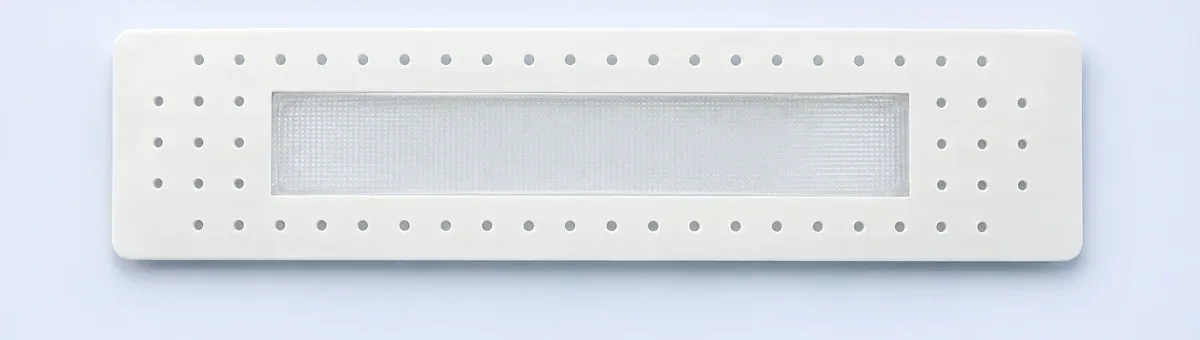
BioRNA patches are an at-home overnight option for scars that are fully closed. They are not silicone — they are dissolving hyaluronic acid micro-tips with hydrolyzed RNA.
These numbers come from a small manufacturer-reported study, not a large trial. A separate published trial in the British Journal of Dermatology (2024) tested a specific siRNA microneedle patch against silicone sheets and found 83.8% vs 74.1% scar-volume reduction. That trial used a different formulation, so its results are not BioRNA product results. There is no published double-blind trial of BioRNA yet; one is in progress. See the full evidence, with sources and limits.
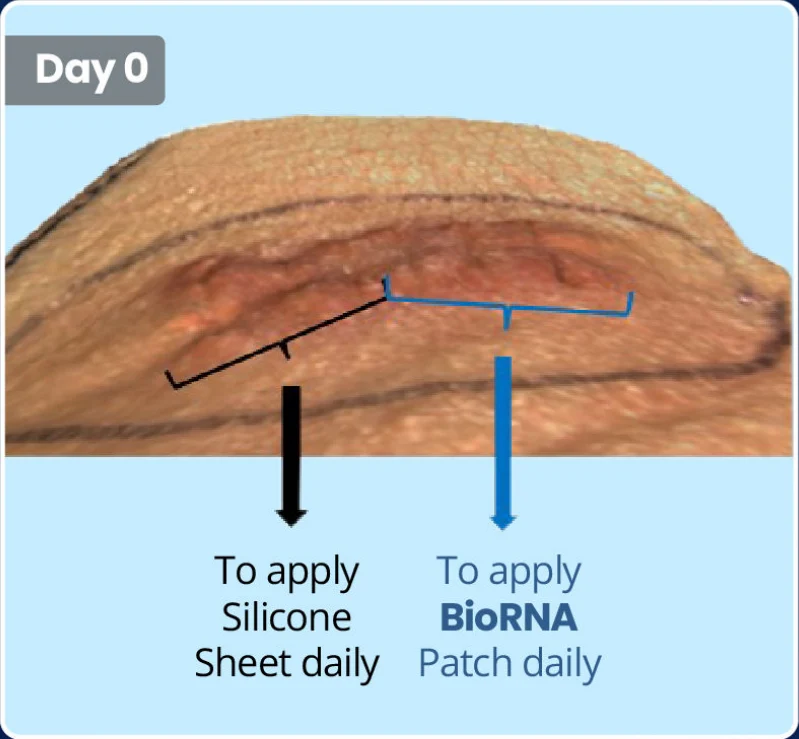
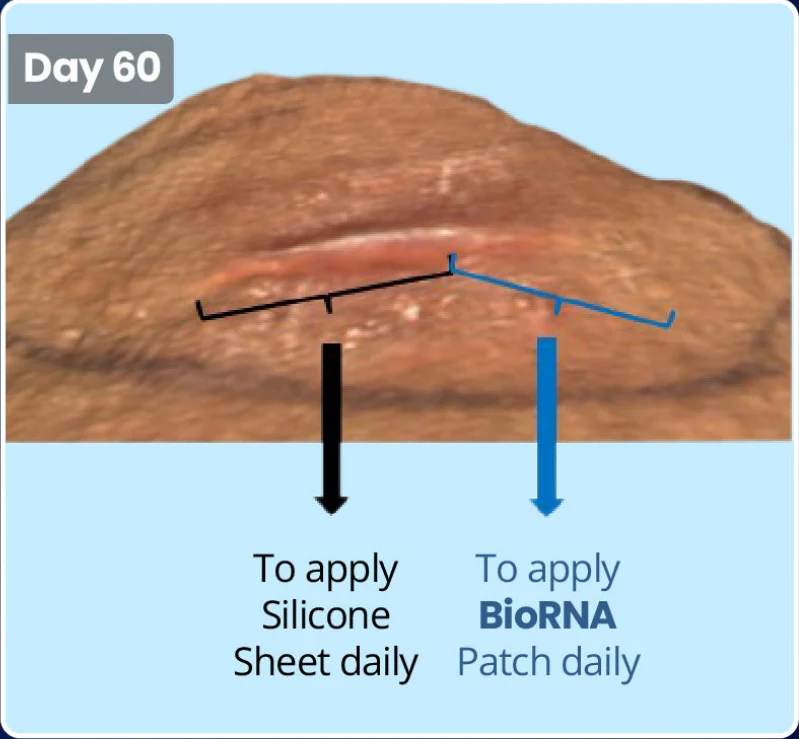
Clinical research example, Day 0 to Day 60: two sides of one scar received different treatments, as marked. The trial tested SPARC-targeting siRNA microneedles against silicone sheets. This is not a marketed BioRNA product result. Individual results vary.
Which treatment fits which scar?
Not every option helps every scar. This is a rough guide — a dermatologist can confirm your scar type in one visit.
| Scar type | At home | With a dermatologist |
|---|---|---|
| Flat scar | BioRNA or silicone patch nightly; sun protection | Usually not needed |
| Raised scar (hypertrophic) | BioRNA or silicone patch nightly; gentle massage | Steroid injections; laser |
| Keloid | Patch care can soften it, but see a dermatologist first | Steroid injections; laser; other in-office care |
| Indented scar (acne, chickenpox) | Patches help less here | Fillers; laser; microneedling |
How long until I see a change?
Scars change slowly, and the timeline matters more than any single product:
- First 2 weeks: the wound closes. There is nothing to judge yet — just wound care.
- With continued use: softening or flattening may progressively show.
- 3 to 6 months: the scar keeps fading and softening.
- 12 to 18 months: the scar matures — this is when you judge the final result.
If nothing changes with steady use, talk to your care team or a dermatologist before switching products. And remember: a scar that is still changing is normal. A scar that is growing, painful or infected is not — get it checked.
What does not work
A lot of scar products promise more than the evidence supports:
- Vitamin E. The evidence is mixed, some people react to it, and it is not a proven scar treatment.
- Most creams and oils. Onion extract, cocoa butter and similar products have little reliable evidence. Moisturizing helps comfort, not scar removal.
- Anything that promises to erase a scar completely. No cream, patch or procedure can do that. If a product promises it, do not trust the rest of what it says.
When to see a doctor
See a doctor or dermatologist if your scar is growing beyond the original wound, painful, very itchy, infected, opening up, or limiting movement — or if you simply are not sure what kind of scar it is. A scar that changes shape or color unexpectedly should also be checked.
Questions about removing scars
Can scars be removed completely?
No. A scar is new tissue that replaces normal skin, so no treatment fully erases it. Treatments can make a scar flatter, softer, lighter and much less noticeable.
How long does it take for a scar to fade?
Scars keep changing for 12 to 18 months. Most fading happens in the first year, and early care — once the wound is fully closed — gives the best chance of a faint scar.
What is the best at-home treatment for scars?
The BioRNA patch. It is the first RNA-based scar patch, and it was tested head-to-head against silicone sheets: in a small study, scars on the BioRNA side were 30% smaller, and down by up to 95% in volume. BioRNA patches are a dissolving micro-tip overnight option for fully closed scars.
Can BioRNA remove my scar?
No product removes a scar completely. In a small study, scars treated with the BioRNA patch were down by up to 95% in volume — the highest result, not the average. In the same study, scar volume was 30% lower than with silicone sheets, and 85% saw no worsening 16.1 months after stopping. Individual results vary.
When can I start treating a scar?
Only after the wound is fully closed. Do not use any scar treatment on open or infected wounds. If you are unsure when to start, ask your care team.
What if my scar is raised or a keloid?
See a dermatologist. Raised scars and keloids may need steroid injections, laser treatment or other in-office care. Do not start home treatment on a scar that is growing, painful or infected without medical advice.
Ready for your next step?
For a daily overnight routine, see BioRNA Daily (Antiscar). For C-section scars, twice a week, see BioRNA-C. Real day-by-day photos are on the Results page, and the full evidence is on the science page. Want to stop a scar before it gets bad? Read how to prevent a scar.
Start only after the wound is fully closed. Do not use on open or infected wounds.