SmoothScar Inc. / Evidence & Education / How to Prevent a Scar
How to prevent a scar
By Smooth Scar · Published November 20, 2026
You can’t always stop a scar from forming — any cut that reaches the deeper layer of skin leaves a mark. But early care makes a big difference: keep the wound clean, moist and covered while it heals, protect it from the sun, don’t pick scabs, and start scar care as soon as the wound is fully closed. Acting early, while the wound is still healing, helps far more than anything tried years later.
BioRNA Daily (Antiscar): $300/box — 2 boxes $515, 3 boxes $710, 4 boxes $880. BioRNA-C: $375/box — 2 boxes $600, 3 boxes $825, 4 boxes $1,000.
This guide is general information, not medical advice. Always follow your surgeon’s instructions for your wound, and call your care team if anything looks wrong.
Why scars form
When skin is cut — by surgery, injury or a burn — the body repairs it with new tissue. That new tissue is a scar. How visible it ends up depends on how deep the cut was, where it is, your genes, your age and how the wound was cared for. Scars keep maturing for 12 to 18 months, so the care you give in the first weeks and months shapes the result for a long time.
Six steps to prevent a bad scar
- Follow your surgeon’s wound-care instructions. Follow their cleaning, dressing and activity instructions first, and call them if anything looks wrong.
- Keep the wound clean, moist and covered. Wash gently with soap and water, keep the area moist with petroleum jelly, and cover it with a clean bandage while it heals. Do not let it dry out and scab over — moist wounds close faster and scar less.
- Don’t pick scabs, and limit stretch on the wound. Scabs are the body’s natural bandage — picking them prolongs healing and raises the odds of a bigger scar. Avoid lifting, stretching and movement that pulls on the wound, especially in the first six weeks.
- Protect the scar from the sun. Sun on healing skin can darken a scar for good — keep it covered, and use sunscreen once the wound is closed, for at least a year.
- Start scar care as soon as the wound is fully closed. Use a BioRNA patch or silicone sheets, worn overnight. Early care works better than late care. Do not start on open or infected skin.
- Know your risk and ask early. If you have had keloids or raised scars before, or your surgery is in a high-tension area such as the chest, shoulders or back, tell your care team before surgery so a prevention plan is in place.
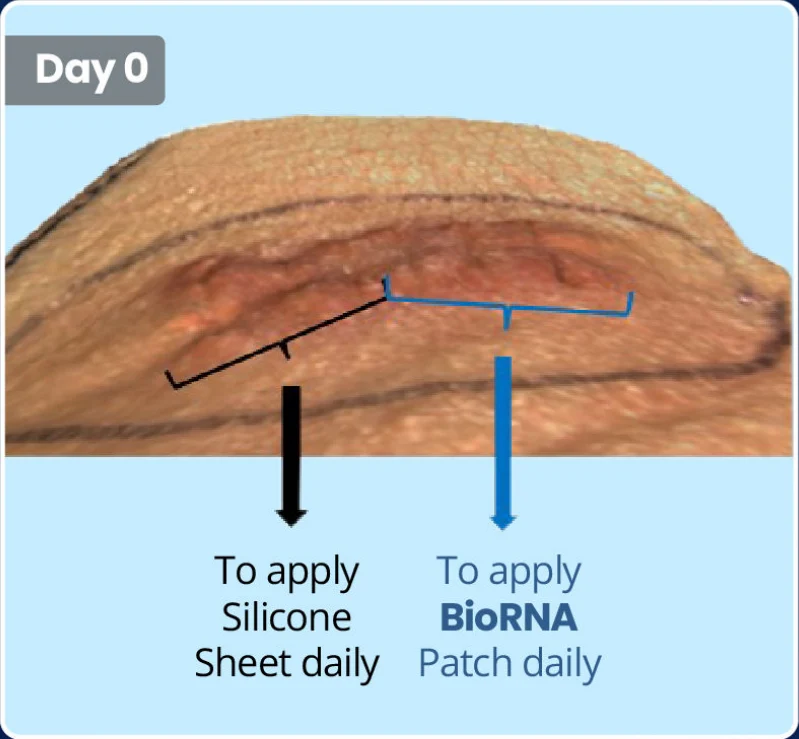
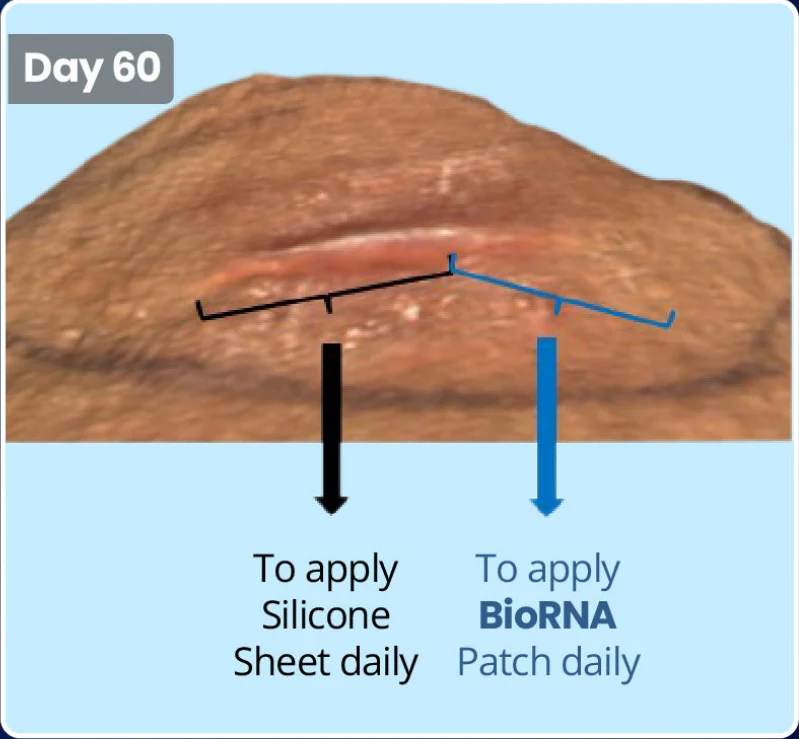
Clinical research example, Day 0 to Day 60: two sides of one scar received different treatments, as marked. The trial tested SPARC-targeting siRNA microneedles against silicone sheets. This is not a marketed BioRNA product result. Individual results vary.
Preventing a C-section scar
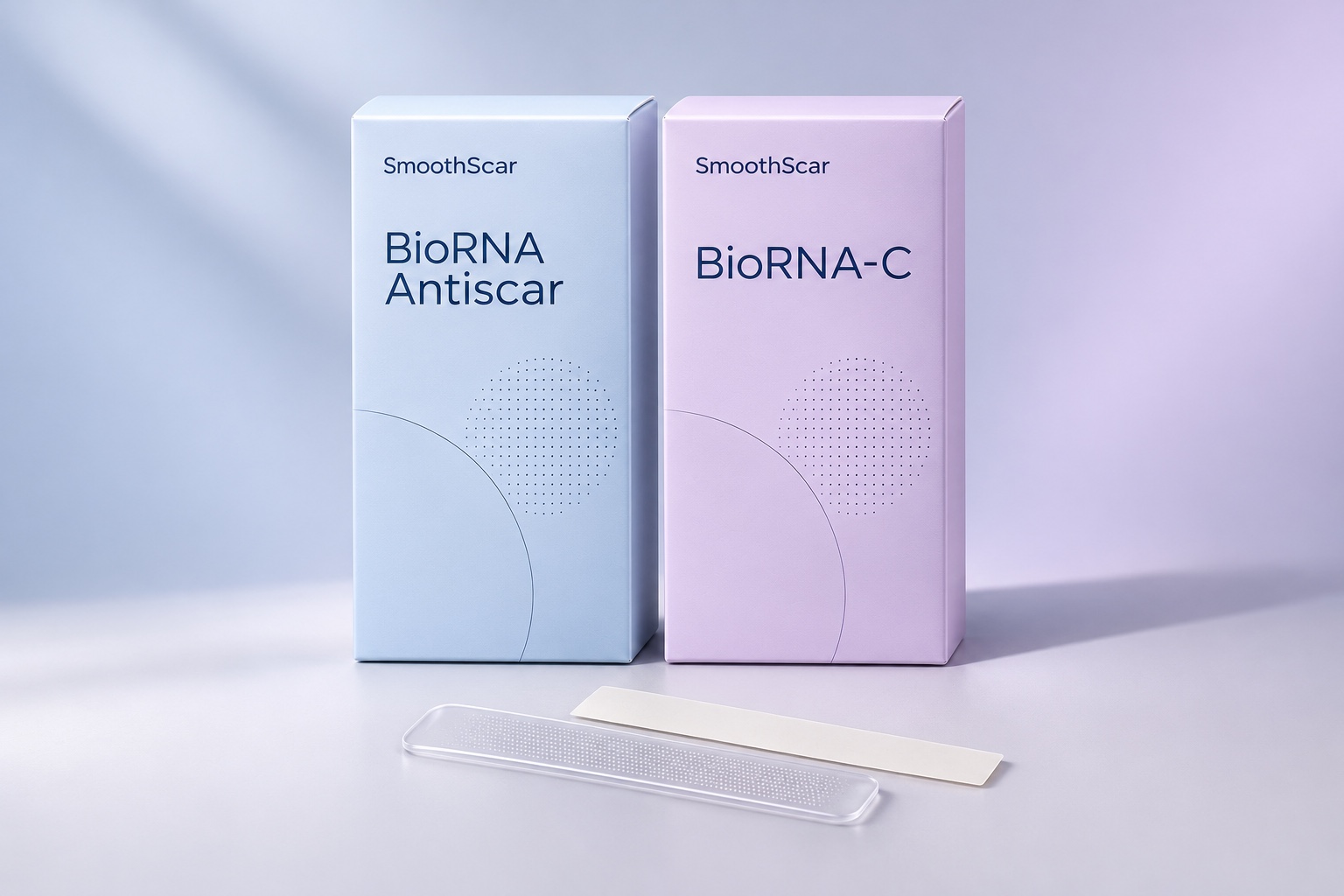
A C-section scar follows the same rules — clean, moist, covered wound care, sun protection, and no picking. The difference is timing and routine: once the wound is fully closed, BioRNA-C is a twice-weekly overnight patch made for C-section scars. Keep the scar covered from the sun while it matures. Many C-section scars keep fading for a year or more. If the scar is already raised or dark, read how to remove a scar.
Ask about scar care at your 6-week postpartum check. That visit is the right time to ask your OB when to start, what to watch for, and whether a patch routine fits your healing. If your scar is raised, painful or pulling, say so — early advice beats waiting.
The first 6 weeks matter most
That is when the wound is under the most tension and the new tissue is at its weakest. Avoid heavy lifting, hard stretching and the gym until your surgeon says it is safe — usually at least a few weeks, longer for tummy and breast surgery. If an area feels pulled or tight, you are doing too much. Rest now, and the scar will thank you later.
Questions to ask your surgeon before surgery
If your surgery is still ahead of you, ask these four questions at your pre-op visit:
- How should I care for the wound in the first two weeks?
- When can I start scar care, and what should I use?
- Am I at higher risk of raised or keloid scarring?
- What should I watch for that means I should call you?
Having a plan before surgery beats scrambling after it. Bring this guide to the visit if it helps.
What about vitamin E and scar creams?
Vitamin E is popular, but the evidence is mixed, and it can irritate some people’s skin. Most scar creams and oils have little reliable evidence. The BioRNA patch is the first RNA-based scar patch, and it was tested head-to-head against silicone sheets. In a small study, scars treated with the BioRNA patch were down by up to 95% in volume (the highest result, not the average), and scar volume was 30% lower than with silicone sheets. See the full evidence, with sources and limits.
When to call your doctor
Call if you see increasing redness, warmth, swelling, pain, pus or drainage, if the wound opens up, or if it is not closing. These can be signs of infection. Also call if a scar grows beyond the original wound, becomes very painful or itchy, or limits movement.
Questions about preventing scars
Can you prevent a scar from forming?
Not entirely. But early care can make a scar much fainter, flatter and less noticeable.
What is the best way to prevent a scar after surgery?
Follow your surgeon’s wound-care instructions, keep the wound clean, moist and covered, protect it from the sun, don’t pick scabs, and start scar care as soon as the wound is fully closed.
How do I prevent a C-section scar from getting worse?
The same wound-care rules apply, plus early scar care once the wound is fully closed. BioRNA-C is a twice-weekly overnight patch made for C-section scars. Ask your OB when it is safe to start.
Do silicone sheets prevent scars?
Silicone sheets and gels hydrate and protect the scar — that is the older standard, used once the skin has closed, for at least 12 hours a day and at least a month. The BioRNA patch was tested head-to-head against silicone sheets in a small study: scars on the BioRNA side were 30% smaller, and down by up to 95% in volume.
Does vitamin E prevent scars?
The evidence is mixed, and vitamin E can irritate some people’s skin. It is not a proven way to prevent scars.
When should I call a doctor about a healing wound?
Call if you see increasing redness, warmth, swelling, pain, pus or drainage, if the wound opens up, or if it is not closing — these can be signs of infection.
Ready for your next step?
For a daily overnight routine, see BioRNA Daily (Antiscar). For C-section scars, twice a week, see BioRNA-C. Real day-by-day photos are on the Results page, and the full evidence is on the science page. Already have a scar? Read how to remove a scar.
Start only after the wound is fully closed. Do not use on open or infected wounds.